
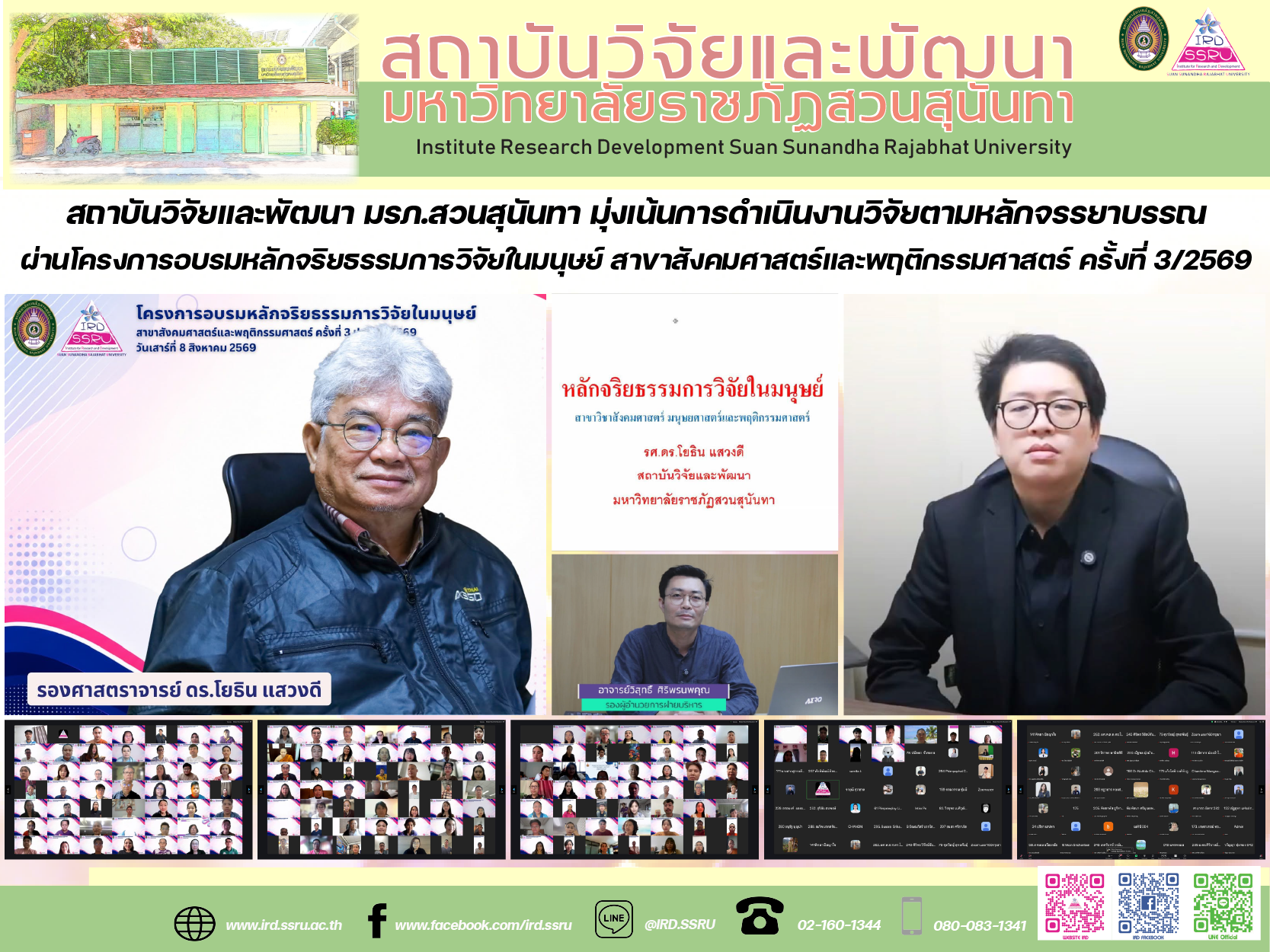
สถาบันวิจัยและพัฒนา มรภ.สวนสุนันทา มุ่งเน้นการดำเนินงานวิจัยตามหลักจรรยาบรรณ ผ่านโครงการอบรมหลักจริยธรรมการวิจัยในมนุษย์ สาขาสังคมศาสตร์และพฤติกรรมศาสตร์ ครั้งที่ 3/2569
วันที่ 8 สิงหาคม 2569 สถาบันวิจัยและพัฒนา มหาวิทยาลัยราชภัฏสวนสุนันทา จัดโครงการอบรม “หลักจริยธรรมการวิจัยในมนุษย์ สาขาสังคมศาสตร์และพฤติกรรมศาสตร์ ครั้งที่ 3/2569” ผ่านระบบออนไลน์ Zoom Meeting เพื่อเสริมสร้างความรู้และความเข้าใจด้านจริยธรรมการวิจัยแก่คณาจารย์ นักวิจัย และผู้ที่เกี่ยวข้อง อันเป็นแนวทางสำคัญในการยกระดับคุณภาพงานวิจัยให้เป็นไปตามมาตรฐานสากล
โครงการดังกล่าวได้รับเกียรติจาก ผู้ช่วยศาสตราจารย์ ดร.มรกต วรชัยรุ่งเรือง ผู้อำนวยการสถาบันวิจัยและพัฒนา เป็นประธานกล่าวเปิดงาน และ อาจารย์วิสุทธิ์ ศิริพรนพคุณ รองผู้อำนวยการฝ่ายบริหาร กล่าวรายงาน โดยมี รองศาสตราจารย์ ดร.โยธิน แสวงดี ประธานคณะกรรมการจริยธรรมการวิจัยในมนุษย์ สาขาสังคมศาสตร์และพฤติกรรมศาสตร์ มหาวิทยาลัยราชภัฏสวนสุนันทา เป็นวิทยากรบรรยายในหัวข้อ “หลักจริยธรรมการวิจัยในมนุษย์”
การบรรยายมุ่งให้ผู้เข้าร่วมเข้าใจหลักการสำคัญของจริยธรรมการวิจัยในมนุษย์อย่างเป็นระบบ ครอบคลุมตั้งแต่การออกแบบและพัฒนาโครงการวิจัย การคัดเลือกผู้เข้าร่วมการวิจัยอย่างเหมาะสม การประเมินความเสี่ยงและประโยชน์ การรักษาความลับและคุ้มครองข้อมูลส่วนบุคคล เพื่อให้ทุกขั้นตอนของกระบวนการวิจัยคำนึงถึงสิทธิและศักดิ์ศรีความเป็นมนุษย์เป็นสำคัญ
การอบรมครั้งนี้มีผู้เข้าร่วมทั้งหมด 297 คน แบ่งเป็นบุคลากรภายในมหาวิทยาลัย 221 คน และบุคคลภายนอก 76 คน โดยผู้เข้าร่วมได้ร่วมรับฟังการบรรยายและแลกเปลี่ยนความคิดเห็นกับวิทยากรในประเด็นที่เกี่ยวข้องกับการดำเนินงานวิจัยในมนุษย์อย่างกว้างขวาง ผ่านระบบออนไลน์ Zoom Meeting
ผลการประเมินความรู้สะท้อนให้เห็นถึงพัฒนาการของผู้เข้าร่วมการอบรมอย่างชัดเจน โดยมีคะแนนเฉลี่ยก่อนการอบรมอยู่ที่ ร้อยละ 65.56 และเพิ่มขึ้นเป็น ร้อยละ 88.00 หลังการอบรม แสดงให้เห็นว่ากิจกรรมดังกล่าวมีส่วนช่วยเพิ่มพูนความรู้และความเข้าใจด้านจริยธรรมการวิจัยในมนุษย์ ตลอดจนสร้างความพร้อมในการนำหลักการไปประยุกต์ใช้ในการออกแบบ วางแผน และดำเนินโครงการวิจัยได้อย่างเหมาะสมยิ่งขึ้น
การอบรมดังกล่าวสอดคล้องกับเป้าหมายการพัฒนาที่ยั่งยืน (SDGs) ได้แก่ SDG 4 การศึกษาที่มีคุณภาพ ผ่านการพัฒนาความรู้ ทักษะ และสมรรถนะของบุคลากรด้านการวิจัย ส่งเสริมการเรียนรู้ที่สามารถนำไปประยุกต์ใช้กับการปฏิบัติงานจริง และช่วยสร้างบุคลากรที่มีความพร้อมในการดำเนินงานวิจัยตามมาตรฐานวิชาชีพและหลักจริยธรรม
ขณะเดียวกัน ยังเชื่อมโยงกับ SDG 16 สันติภาพ ความยุติธรรม และสถาบันที่เข้มแข็ง ผ่านการส่งเสริมวัฒนธรรมการวิจัยที่ยึดหลักธรรมาภิบาล ความโปร่งใส ความรับผิดชอบ และการตรวจสอบได้ โดยช่วยให้บุคลากรเข้าใจบทบาทของกระบวนการพิจารณาจริยธรรมการวิจัย และตระหนักว่าการกำกับดูแลด้านจริยธรรมไม่ใช่เพียงขั้นตอนทางเอกสาร แต่เป็นกลไกสำคัญในการคุ้มครองผู้เข้าร่วมการวิจัยและสร้างความเชื่อมั่นต่อระบบวิจัยขององค์กร
กิจกรรมยังสนับสนุนทิศทางของ SDG 3 สุขภาพและความเป็นอยู่ที่ดี เนื่องจากจริยธรรมการวิจัยในมนุษย์ให้ความสำคัญกับการประเมินและลดความเสี่ยงที่อาจเกิดขึ้นต่อผู้เข้าร่วม ทั้งด้านร่างกาย จิตใจ สังคม และความเป็นส่วนตัว ตลอดจนการจัดให้มีกระบวนการให้ข้อมูลและขอความยินยอมอย่างเหมาะสม เพื่อให้ผู้เข้าร่วมการวิจัยได้รับการคุ้มครองด้านสิทธิ ความปลอดภัย และสวัสดิภาพตลอดกระบวนการวิจัย
นอกจากนี้ การให้ความสำคัญกับหลักความเป็นธรรมและการไม่เลือกปฏิบัติยังเชื่อมโยงกับ SDG 10 การลดความเหลื่อมล้ำ โดยเฉพาะการคุ้มครองบุคคลหรือกลุ่มที่มีความเปราะบาง การคัดเลือกผู้เข้าร่วมการวิจัยอย่างเหมาะสม และการพิจารณาการกระจายความเสี่ยงและประโยชน์จากการวิจัยอย่างเป็นธรรม เพื่อให้การดำเนินงานวิจัยเคารพสิทธิและศักดิ์ศรีของทุกคนอย่างเท่าเทียม
ในด้านการพัฒนาระบบวิจัย กิจกรรมดังกล่าวยังเชื่อมโยงกับ SDG 9 อุตสาหกรรม นวัตกรรม และโครงสร้างพื้นฐาน ในฐานะการวางรากฐานด้านคุณภาพและมาตรฐานของบุคลากรวิจัย ซึ่งเป็นองค์ประกอบหนึ่งของการเสริมสร้างระบบวิจัยและนวัตกรรมที่เข้มแข็ง การพัฒนานักวิจัยให้สามารถดำเนินงานบนพื้นฐานของหลักวิชาการ จริยธรรม และความรับผิดชอบต่อสังคม ช่วยสนับสนุนให้ผลงานวิจัยและนวัตกรรมในอนาคตมีความน่าเชื่อถือและสามารถนำไปใช้ประโยชน์ได้อย่างเหมาะสม
สถาบันวิจัยและพัฒนา มหาวิทยาลัยราชภัฏสวนสุนันทา มุ่งส่งเสริมการพัฒนาความรู้ด้านจริยธรรมการวิจัยอย่างต่อเนื่อง ซึ่งไม่เพียงเป็นการเพิ่มพูนทักษะของนักวิจัยเท่านั้น แต่ยังช่วยสนับสนุนทิศทางการพัฒนาระบบการวิจัยของมหาวิทยาลัยให้ความสำคัญกับคุณภาพ ความรับผิดชอบ และมาตรฐานในการดำเนินงาน ซึ่งเป็นพื้นฐานสำคัญของการสร้างองค์ความรู้ที่น่าเชื่อถือและการพัฒนาที่ยั่งยืนในระยะต่อไป
Institute for Research and Development, SSRU Promotes Ethical Research Practices through the 3rd Training Program on Human Research Ethics in Social Sciences and Behavioral Sciences for 2026
On August 8, 2026, the Institute for Research and Development, Suan Sunandha Rajabhat University, organized a training program titled “Human Research Ethics in Social Sciences and Behavioral Sciences, No. 3/2026” via Zoom Meeting. The program aimed to enhance knowledge and understanding of research ethics among lecturers, researchers, and relevant personnel, serving as an important approach to improving research quality in accordance with international standards.
The program was honored by Asst. Prof. Dr. Morakot Worachairungreung, Director of the Institute for Research and Development, who presided over the opening ceremony. Lecturer Wisut Siripornnopakhun, Vice-Director for Administration, delivered the report. The lecture on “Human Research Ethics” was delivered by Assoc. Prof. Dr. Yothin Sawaengdee, Chairperson of the Human Research Ethics Committee in Social Sciences and Behavioral Sciences, Suan Sunandha Rajabhat University.
The lecture focused on providing participants with a systematic understanding of key principles of human research ethics. The content covered research project design and development, appropriate participant recruitment, risk-benefit assessment, confidentiality, and personal data protection. These principles are essential to ensuring that every stage of the research process prioritizes the rights and dignity of human participants.
A total of 297 participants attended the training, comprising 221 internal university personnel and 76 external participants. Participants joined the lecture, exchanged views, and discussed issues related to human research through the online Zoom Meeting platform.
The knowledge assessment results clearly reflected participants’ learning development. The average pre-training score was 65.56 percent, which increased to 88.00 percent after the training. This indicates that the activity significantly contributed to enhancing participants’ knowledge and understanding of human research ethics, while preparing them to apply ethical principles more effectively in designing, planning, and conducting research projects.
The training aligns with the Sustainable Development Goals (SDGs), particularly SDG 4: Quality Education, through the development of knowledge, skills, and competencies among research personnel. It promotes learning that can be applied in real work settings and supports the development of personnel who are prepared to conduct research in accordance with professional standards and ethical principles.
At the same time, the activity is linked to SDG 16: Peace, Justice and Strong Institutions by promoting a research culture based on good governance, transparency, accountability, and verifiability. It helps personnel understand the role of the research ethics review process and recognize that ethical oversight is not merely a documentary procedure, but an essential mechanism for protecting research participants and strengthening confidence in the organization’s research system.
The activity also supports SDG 3: Good Health and Well-being, as human research ethics places importance on assessing and minimizing potential risks to participants, including physical, psychological, social, and privacy-related risks. It also emphasizes appropriate information provision and informed consent processes to ensure that participants’ rights, safety, and welfare are protected throughout the research process.
In addition, the emphasis on fairness and non-discrimination is connected to SDG 10: Reduced Inequalities, particularly in protecting vulnerable individuals or groups, ensuring appropriate participant selection, and fairly considering the distribution of research risks and benefits. This helps ensure that research practices respect the rights and dignity of all individuals equally.
In terms of research system development, the activity is also related to SDG 9: Industry, Innovation and Infrastructure, as it lays a foundation for quality and standards among research personnel. This is a key component in strengthening a robust research and innovation system. Developing researchers who conduct their work based on academic principles, ethics, and social responsibility will help ensure that future research and innovation outputs are credible and can be appropriately utilized.
The Institute for Research and Development, Suan Sunandha Rajabhat University, remains committed to continuously promoting knowledge development in research ethics. This effort not only enhances researchers’ skills, but also supports the university’s research system in emphasizing quality, responsibility, and operational standards—an essential foundation for creating reliable knowledge and advancing sustainable development in the future.
สมิตา กลัดอินทร์ : ข้อมูล
ทัตพงศ์ เรืองปราชญ์ : ภาพ
ภาณุพงศ์ ภุมรินทร์ : รายงาน
____________________________________________
สถาบันวิจัยและพัฒนา มหาวิทยาลัยราชภัฏสวนสุนันทา
โทร. 0 2160 1344-6
Line ID : @ird.ssru